
The Fourth Amendment protects all persons from warrantless government searches and seizures of their persons, houses, papers and effects. It requires that warrants be supported by probable cause of crime and specifically describe the place to be searched and the persons or things to be seized.
Last week, for the first time in the modern era, the government argued to the Supreme Court of the United States that the Fourth Amendment to the Constitution did not outlaw general warrants. General warrants were issued in the colonial era by a secret court in London. They were not based on probable cause of crime or even on articulable suspicion about a potential defendant. They did not identify a target or state what crime was being investigated.
Rather, general warrants were based on governmental need; a meaningless standard as whatever the government wants it will tell a court it needs. The warrants authorized the bearer of the warrant to search wherever he wished and seize whatever he found.
The stated motivation for the general warrants was the British government’s enforcement of the Stamp Act. That legislation required all colonists to have stamps affixed to all papers, books and newspapers in their possession. The enforcement of the Stamp Act was the government’s fig leaf for spying.
We know that the true reason for the Stamp Act was to conduct surreptitious searches for revolutionary materials. We know this because during the one-year existence of the Stamp Act — 1765 — a group of enterprising students at the College of New Jersey, now known as Princeton University, calculated that more revenue was spent to enforce the act than was collected by the sale of the stamps.
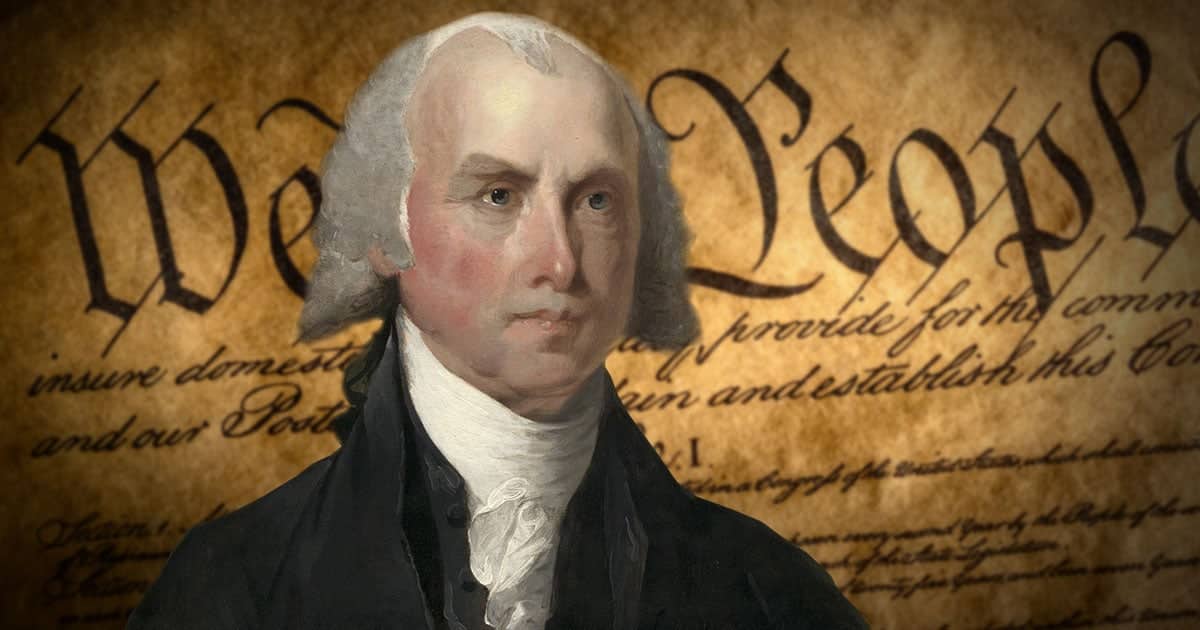
Historians believe that the use of general warrants for the enforcement of the Stamp Act pushed many colonists into the independence camp 10 years later in 1775. The use of general warrants also motivated James Madison and his colleagues in 1791 to craft the Fourth Amendment whose specificity requirement “particularly describing the place to be searched and the persons or things to be seized” poignantly did away with search where you wish and seize whatever you find.
Until now.
Now, in one week on Capitol Hill, the right to privacy is facing its gravest challenges since pre-colonial days, in Congress and the Supreme Court. Congress will wrestle with Section 702 of the Foreign Intelligence Surveillance Act, which expires in just days, and the court will hear a claim that general warrants are still viable.
Sec. 702 permits warrantless surveillance on Americans by permitting federal agents to use software that allows them to conduct surveillance of all fiber optic means of communication — mobile phones, message texting, emails — based on the lawful communications of some Americans to foreign persons and then their subsequent lawful communications to other Americans. The “other Americans” can include all 340 million of us.
Theoretically, the data gathered from these warrantless searches cannot be used for criminal prosecutions, since even the feds who do this spying have told members of Congress that they recognize the need for search warrants to access the content of the data. There are at least two reasons that no one should believe what the feds have said. The first is the feds lie. In 2023, they accessed the content of the data thousands of times without warrants. The second reason is that Madison and the Fourth Amendment’s ratifiers did not believe the government would restrain itself, hence the specificity requirement.
As if all this were not enough to keep those of us who monitor constitutional fidelity awake at night, this week the Trump administration actually told the court that it should be able to use general warrants if the target has failed to inform his service provider of his wish for privacy. Okello Chatrie was convicted of bank robbery when the feds persuaded a state judge to sign a search warrant for Google records that failed to identify a target, failed to articulate a crime and failed to specify what the government sought.
The warrant was for the ping records — the records of cellphones showing their location — of all cellphones in the vicinity of a bank that had been robbed on the day and at the time of the robbery. Then the feds persuaded another judge to sign another general warrant that ordered Google to unmask the identity of the owner/users of all those cellphones. This led them to several homes that the feds persuaded another judge to authorize them to raid.
All three of these warrants were in direct violation of the Fourth Amendment by failing to describe particularly the place to be searched or the persons or things to be seized. At trial before one of these constitutionally challenged judges, the defendant Chatrie was convicted on the basis of the Google pings and the loot found in his home.
The government is patting itself on the back. Yet, its agents and prosecutors took an oath to uphold the Fourth Amendment; just as the government’s domestic spies have done; just as judges do.
Does anyone in the government take the Constitution seriously? If it means what it says — as the late Justice Antonin Scalia argued literally thousands of times — then why does the government evade it?
The Constitution is intended to be an obstacle to the government. Its principal value judgment is that the individual is sovereign, not the government; and the government can only do what the governed have affirmatively consented to allow it to do. And the governed have not consented to general warrants.
Justice Scalia recognized that the Fourth Amendment protects more than pings and loot. He knew it protects beliefs, thoughts, sensations and emotions when he famously wrote that “there is nothing new in the realization that the Constitution sometimes insulates the criminality of a few in order to protect the privacy of us all.”
To learn more about Judge Andrew Napolitano, visit https://JudgeNap.com.
COPYRIGHT 2026 ANDREW P. NAPOLITANO
DISTRIBUTED BY CREATORS.COM
