
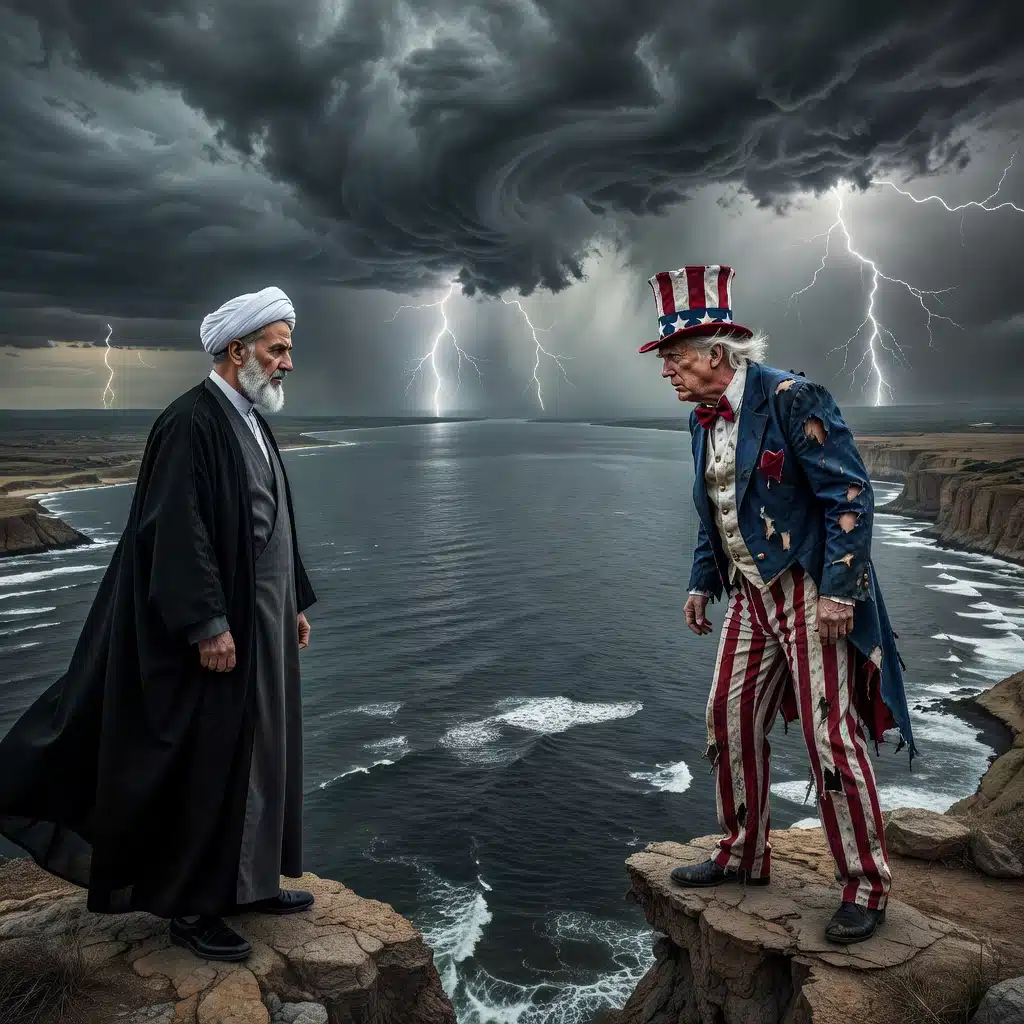
A typical US tactic against a strategic target is to ‘boil the frog’ by slowly increasing the temperature of the water it is sitting it. The conflict in Ukraine is an good example for this. Hits against Russia, directed by the CIA, are escalated bit by bit while Russia is reluctant to more severe deterrence measures.
The current war on Iran is another example. The US is insisting on a ceasefire while trying to erode Iran’s leverage with economic strangulation.
Iran’s major weapon, the blockade of the Strait of Hormuz, will need another month or two to fully unfold its intended effect on the US and global economy. Meanwhile the US is trying to tire Iran with fake diplomacy, economic measures (its blockade) and pinpoint strikes.
But Iran is well aware of this tactic. It has decided to avoid this ceasefire trap by continuous escalation:
The United States and Israel are using this [ceasefire] period to reshape realities on the ground, weaken Iran’s leverage, and arrive at a negotiating table where Tehran’s position has already been quietly eroded. This perception is strengthening those within the Islamic Republic who argue that diplomatic restraint, under current conditions, carries its own strategic costs.
…
The delay in finalizing the memorandum of understanding is increasingly interpreted as purposive rather than procedural and as a US attempt to use the passage of time as a strategic instrument. The concern is that each week of ceasefire, with American military and economic pressure continuing unabated and Iranian restraint producing no reciprocal concessions, represents a net erosion of the position Tehran believes it secured during the forty days of active fighting.
Iran has decided to respond to this ‘boiling-the-frog’ tactic by increasing the cost for even the slightest US attack. It is no longer responding in kind. Each US strike is answered by hitting back stronger and against more targets. As Rob Campbell provides of the skirmish of June 2:
Late at night, the Americans hit an Iranian oil tanker and the Iranians retaliated with an attack on an USraeli vessel. The Americans also targeted the control tower on Qeshm Island and the Iranians responded with attacks on US Kuwaiti bases at Ali Al- Salem and Arifjan and the Fifth Fleet base. Bahrain also came under attack and it airspace closed to all traffic. It is claimed that 136 Shahed drones were seen above Kuwait while heavy damage was inflicted on Kuwait’s only international airport which has been closed.
…
Satellite images indicate damage to a hanger which housed drones and aircraft at Ali al-Salem airbase in KuwaitThe Iranians also attacked the Kurdish Separatist group at their HG in Erbil (Iraqi Kurdistan).
Iran has warned the Americans that they will respond to future attacks with increased intensity. which they appear to be doing.
The increased intensity is designed to avoid the trap:
As economic pressure mounts, Israel continues its campaign against Hezbollah, and Washington works to reduce the strategic significance of Hormuz before any deal is concluded, more voices within the Islamic Republic are arriving at the conclusion that leverage must be actively defended before it can be usefully negotiated.
Iran wants an agreement with the US but is also expecting and prepared for a new round of war. For political reason President Trump is, for now, trying to avoid both, an agreement with Iran and renewed fighting. He continues to ignore Iran’s escalation. But he will have to respond (archived) if it ends up killing US soldiers:
President Trump has told aides privately that he would consider ending the ceasefire with Iran if Tehran kills American troops, US officials said, insisting that the weekslong pause in airstrikes remains intact despite a steady stream of violent skirmishes.
The president’s reluctance to reignite the war suggests he might be willing to withstand smaller flare-ups for weeks—or even months—to avoid a broader conflict in the Middle East.
Trump is following the advice of Israeli lobbyists who are urging him (archived) to wait for now and to hit Iran later:
Mark Dubowitz of the Foundation for Defense of Democracies has argued that Trump should use the cease-fire to get the American economy back on track, and then only later, in the fall, to “start to think about returning to major military operations but not doing it before the midterms, when the knock-on effects could be very difficult for him politically.”
Iran is well aware of Trump’s current dilemma. It is in its interest to keep the conflict hot and going rather than to let it cool down now only to flare up later. The increase of severity of its (retaliatory) strikes against US assets will thus continue:
Iran’s navy has said that it fired warning missiles and drones at US warships in the Gulf of Oman on Friday.
It accused the American navy of harassing maritime traffic and seizing commercial vessels and oil tankers, according to Iranian state media.
So far Iran had only hit at US ground assets in the Gulf region. Those attacks have caused sever damage but only few casualties. Until now Iran had avoided strikes on warships as such attacks tend to cause dead and wounded in higher numbers.
But to keep Trump engaged will require more serious measures. Iran needs to increase its leverage before time starts to erode it.
The ‘warning missiles’ against US warships are an escalation. But they are not sufficient to move Trump.
In a day or a two one one of the ‘warning’ missiles will likely (have to) reach its target.
Reprinted with permission from Moon of Alabama.
