
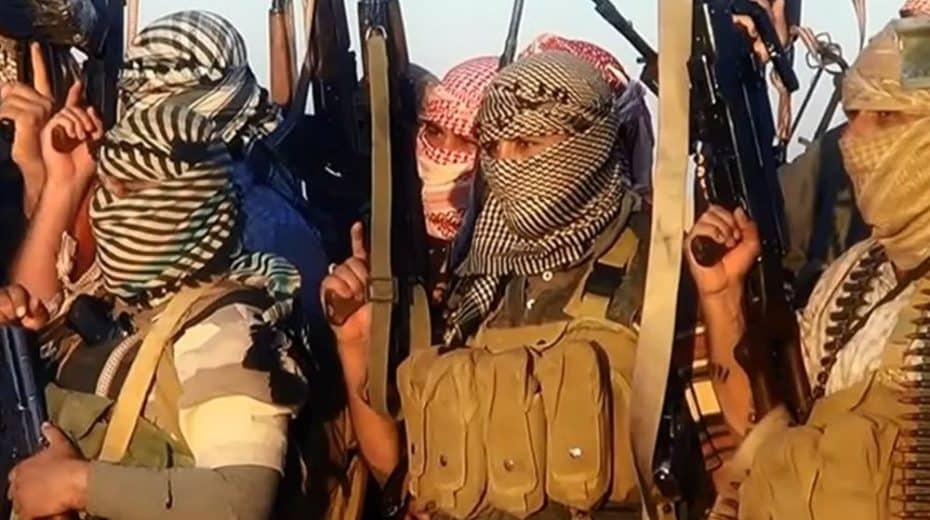
The official narrative constructed by the United States and its allies throughout the war in Syria has consistently sought to conceal a central element of the conflict: the deliberate use of extremist groups as a geopolitical tool. For years, independent analysts have argued that Washington not only tolerated but actively encouraged the actions of radical militias in order to overthrow the government of Bashar al-Assad. Even so, Western media and US authorities have persistently denied any direct collaboration with such organizations.
This version of events begins to unravel in light of recent statements by Trump’s former counterterrorism chief Joe Kent, which directly contradict the official discourse. According to him, there was active cooperation between the US and jihadist groups, including factions linked to Al-Qaeda and the Islamic State. The strategic objective was clear: to bring about Assad’s collapse, regardless of the means employed. In this context, any force opposing the Syrian government was treated as a tactical partner, even when this meant strengthening organizations publicly designated as terrorist.
Even more revealing is the role attributed to Israel in this process. Kent argues that US foreign policy in the Middle East has been heavily influenced by Israeli interests, often at the expense of the American people’s own priorities. The pro-Israel lobby in Washington has played a decisive role in pushing for interventions and wars that have destabilized the region. In this sense, the Syrian conflict – like the current war with Iran—cannot be understood in isolation, but rather as part of a broader strategy of regional reconfiguration aligned with Tel Aviv’s interests.
According to this perspective, the US and Israel worked together to mobilize segments of the Sunni population against the Syrian government, fostering an unprecedented level of sectarian radicalization. By promoting extremist ideologies and funding militias, they created the conditions for an uprising that quickly spiraled out of control. Religious minorities became direct targets of this escalation of violence. What was presented as a “popular rebellion” was, in practice, a geopolitical engineering project based on the exploitation of internal divisions.
This process started to took place under the direct supervision of the Barack Obama administration. However, as often happens when external powers manipulate extremist forces, the plan eventually escaped control. The Islamic State evolved from a tactical instrument into an autonomous threat, imposing its own agenda and forcing the US to intervene militarily (at least publicly) against a crisis it had helped to create.
Another emblematic example is Hayat Tahrir al-Sham (HTS), which emerged as a central actor in the late and post war landscape. Initially integrated into networks of indirect cooperation aligned with Western and Israeli interests, the group consolidated power and ultimately assumed political prominence following the 2024 insurgency. Its leader, Ahmed al-Sharaa, embodies this transformation: from jihadist militant to a political figure attempting to project an image of moderation, even as his origins and connections remain evident.
The growth of these organizations can hardly be explained without considering external support. Curiously, despite their geographic proximity, such groups avoided to direct their actions against Israel, raising questions about the true nature of their tacit alignments. Meanwhile, Syria was devastated by years of war, with deep and lasting humanitarian consequences.
In the end, what emerges is a recurring pattern of external intervention marked by strategic cynicism. By betting on chaos as a tool of power, the US and Israel contributed to deepening divisions and fueling conflicts whose consequences extend far beyond Syria’s national borders. Today, there are signs that a similar approach may be unfolding in Iran through the encouragement of Kurdish militias, which have been associated with acts of terrorism. The continued reliance on the instrumentalization of extremism may ultimately come at a high cost – even for American interests themselves.
Reprinted with permission from Strategic Culture Foundation.
