
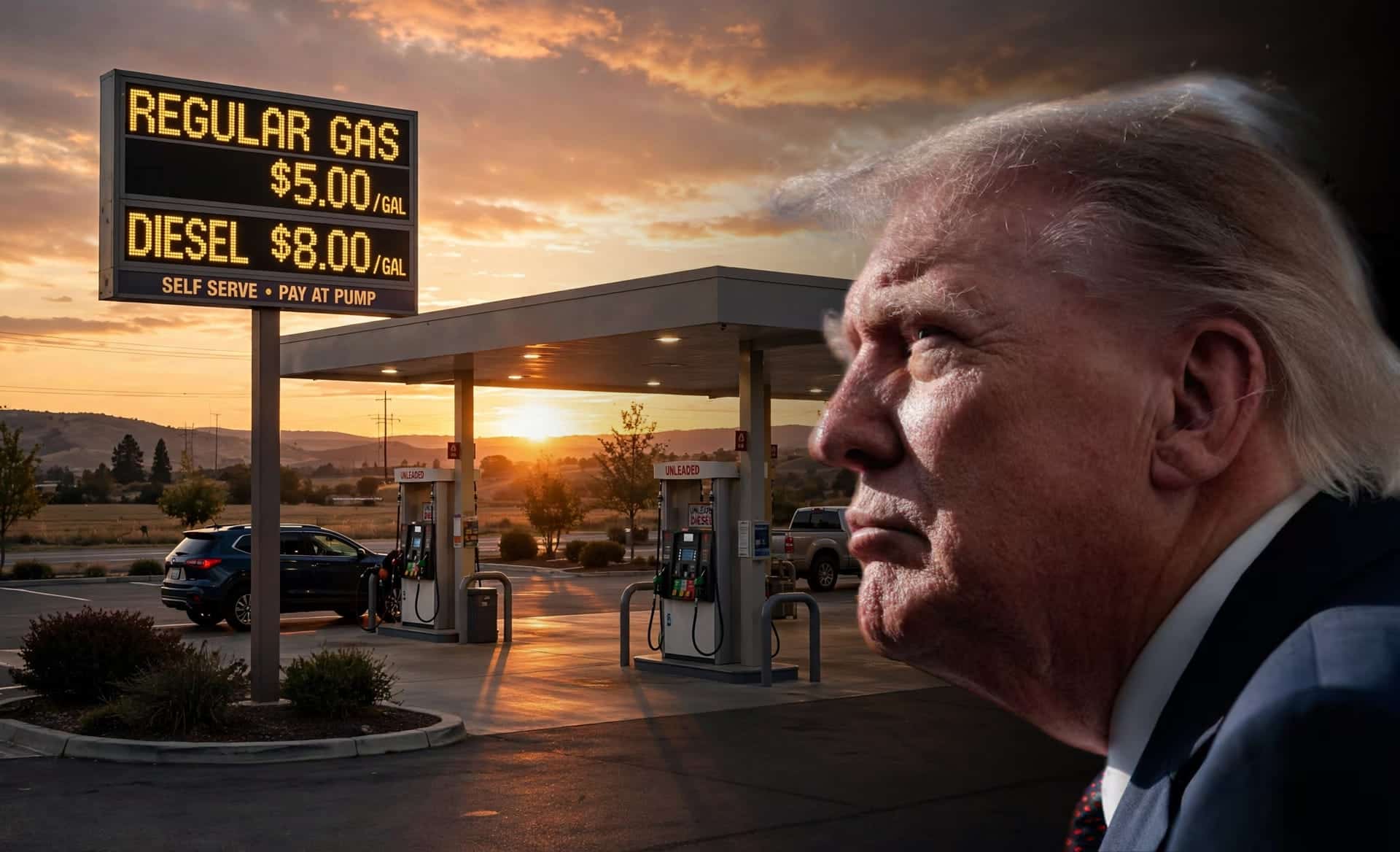
Last months the Trump administration was loudly claiming that Iran had lost control of the Strait of Hormuz. Some ‘experts’ even claimed that the flow of oil was back at a pre-war level.
Both of those claims were not true but short term blimps within volatile data. Attacks on ships passing through the Strait have increased. The flow of crude oil continues to be below the pre-war level. The draw down of nearly empty reserves is ongoing. The price of oil continues to rise:
Brent crude futures for December delivery, the global pricing benchmark, were marked 1.6% higher at $111.30 a barrel on Tuesday, a 13.7% gain on the month and working toward the highest closing price since May 19.
This is no longer a temporary problem as long term prices are rising too:
Oil traders are increasingly pricing the battle over the Strait of Hormuz as the new normal. Futures contracts for brent crude in December 2027 are now close to $90 a barrel, the highest ever and a sharp departure from even a month ago.
Further increasing the price for crude oil are the higher costs of transport by sea. Very Large Crude Carriers (VLCC), used for long distance transport, have become very expensive to rent:
VLCC rates from the Gulf to China initially jumped from around $4/bbl to $17/bbl, before easing to $11–12/bbl through April–July. The expiry of the US-Iran ceasefire in August triggered another steep increase, taking freight to $33/bbl by late September and pushing current landed costs from the Middle Eastern Gulf to around $140/bbl in China. For Japan and South Korean freight, lifted landed costs were even higher, to around $145/bbl.
Alternative loading points have offered uneven relief. Freight from Saudi Arabia’s Yanbu terminal to China trended within the $6–7/bbl bandwidth after the initial wartime spike, but Houthi restrictions on Saudi cargoes through Bab el-Mandeb drove it to $28/bbl by mid-October, bringing landed costs to around$140/bbl. Saudi loadings at Yanbu have since slowed down to 1.6-1.8 million b/d (half the March-July average) following intensified Houthi attacks on energy infrastructure along the Red Sea coast, with the Gulf handling the bulk of exports.
Some 15% of the 1,000 strong global VLCC fleet is sitting in the Gulf of Oman where it is waiting to be filled by ship-to-ship transport with oil that has passed on smaller tankers through the Strait of Hormuz. Any delay in the Strait has thereby a direct influence on VLCC availability elsewhere. VLCC oil traffic from Brazil to China or West-Africa to India sees similar high rates.
Even more affected by the situation in the Middle East are hydrocarbon products. Diesel and jet-fuel are scarce.
After war damage to their refineries Middle Eastern countries have stopped to export of these. Russia and China have blocked their exports to be able to feed their local demand. Refineries in the U.S. and Europe are at the limit of their capacities. In total some 5 million bl/d are missing.
The situation for natural gas and fertilizer is even worse:
Qatar, the second largest exporter of liquified natural gas, shipped 18 cargoes of liquefied natural gas in the war’s first six months, against 509 a year earlier, and damage at Ras Laffan has removed around 17 percent of its capacity, a loss that would outlast any ceasefire. The Gulf normally supplies about one-third of the world’s traded urea, and agricultural economists warn that next year’s fertilizer buying season may prove more exposed than this one.
Higher energy prices for a longer time will increase inflation in western countries. Central banks, hampered by their ideology, will raise interest rates. (This even as this is unlikely to influence the effects of a supply shock on prices.) Already over-indebted companies, consumers and states will have to cut back on spending. A global recession sets in.
There will be no relief in any of these markets until the conflict in the Middle East is resolved:
Normalization will not take place until there is a durable diplomatic agreement that allows confidence to return. This point was made recently by the CEO of Saudi Arabia’s state oil firm. New Trump administration initiatives such as easing sanctions on Russian diesel or the shadow fleet provide too little actual volume or capacity to make any meaningful impact on the dynamic.
It is therefore increasingly evident that US fortunes in this war cannot be measured by daily tanker transits. Increased flows through the Strait could reasonably be considered a tactical victory that lessens Iran’s immediate leverage and even reduces the possibility of a major increase in oil prices from their current baseline. It would be a misreading of the situation, however, to see this as a strategic victory that makes serious diplomacy unnecessary or allows the US to dictate terms.
It is unlikely that the U.S. is able, or willing, to sue for peace in the Gulf. I find it more likely that the Trump administration, in cooperation with Israel, will launch another violent attempt to bring Iran (and the Houthi in Yemen?) to their knees.
The chances for achieving that are minuscule.
Reprinted with permission from Moon of Alabama.
