
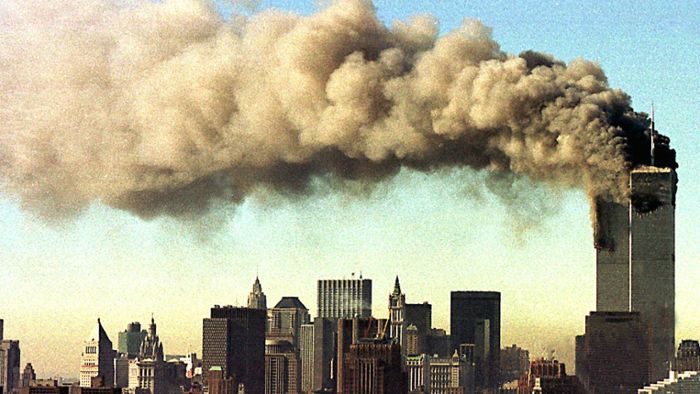
One of the most disastrous consequences of the 9/11 aftermath was the pass that the American people gave to their own government. Their anger was focused entirely on the terrorists rather than on both the terrorists and the government that provoked the attacks.
There were two reasons for this phenomenon.
The biggest reason is that Americans bought into the rationale that U.S officials immediately announced as to motive — that is, the reason the terrorists struck on 9/11 with their devastating attack. US officials said that the terrorists had been motivated to strike out of a supposed hatred for America’s “freedom and values.” Some officials also maintained that the terrorists had attacked as part of a supposed centuries-old Islamic campaign to establish a worldwide caliphate.
Those were lies — intentional, knowing, deliberate lies. The real reason that the terrorists had struck was retaliation. They were retaliating out of anger over the massive death and destruction that US officials had unleashed in the Middle East, especially in Iraq with bombings and sanctions, after the US.national-security establishment’s Cold War racket suddenly and unexpectedly came to an end in 1989.
The second reason for Americans’ failure to focus on the responsibility that the US government had for the 9/11 retaliatory strikes is that Americans viewed their federal government as their daddy, one that would never lie to them or put them in danger. Their daddy would do anything and everything to keep them safe. Thus, Americans bought into the “freedom and values” lie and summarily rejected any suggestion that their daddy’s policies were responsible for provoking the 9/11 retaliation. In fact, whenever a libertarian would point to the US government’s role in provoking the 9/11 attacks, American statists would immediately respond with, “Oh, so you’re now defending the terrorists and the Muslims. You’re a traitor.”
How different things would have been if Americans had acknowledged the role that US foreign interventionism had played in provoking the 9/11 attacks. In that case, there would have been tremendous anger directed not just at the terrorists but also at the government whose foreign interventionism had motivated the terrorists to retaliate.
In that case, Americans could have focused on two things: (1) restoring our nation’s founding foreign policy of non-interventionism, a foreign policy that had lasted more than 100 years; and (2) restoring America’s founding governmental system of a limited-government republic, with just a small, basic military force, and dismantling the totalitarian-like national-security state governmental structure that came into existence after World War II to wage the old Cold War racket.
Instead, by focusing exclusively on the terrorists and giving the US government a pass on its role in provoking the 9/11 attacks, Americans rallied to their political daddy, as it embarked on more deadly and destructive interventionist campaigns, including the invasions of Afghanistan and Iraq. In other words, US officials, with the full support of the American people, continued and expanded the very same interventionist foreign policy that had given rise to the 9/11 attacks.
Not surprisingly, the decision to invade Afghanistan and Iraq as part of the new “war on terrorism” now placed America under a constant, never-ending threat of terrorist retaliation. That’s what made the “war on terrorism” an even better racket than the old Cold War racket, which involved the supposed threat posed by the Reds. The wars in Afghanistan and Iraq were terrorist-producing machines. The more death and destruction inflicted on people over there, the greater the chance of terrorist retaliation here at home. That’s what made the “war on terrorism” a perpetual racket, which, needless to say, was a boon to those who were making big money off this racket.
Equally important, from the standpoint of US officials, was the fact that US officials were able to use the 9/11 attacks as a way to consolidate power over the American people — much more power than they had achieved during their old Cold War racket. Conjuring up images of fascist regimes, US officials called into existence the Department of Homeland Security. There was also the patriotically named USA PATRIOT Act, which subjected Americans to the threat of warrantless searches. There were mass secret surveillance and the illegal telecom scandals. There was the TSA takeover of the airports. Ominously, there was also the clarification that the national-security establishment’s omnipotent Cold War powers of assassination, torture, and indefinite detention applied not just to foreigners but also to Americans.
In other words, the 9/11 attacks served to accelerate the destruction of the liberty and the privacy of the American people at the hands of their government. The tragedy is that this accelerated destruction of liberty and privacy was ardently supported by the American people themselves, who were more scared to death of the terrorists and the Muslims than they had been of the Reds during the old Cold War racket. Thus, Americans were even more willing to relinquish their freedoms in the hope of being kept safe from the terrorists and the Muslims than they had been during the Cold War racket.
The question is: What now? Knowing now the role that the US government played in provoking the 9/11 attacks and knowing full well the adverse consequences of foreign interventionism, will Americans continue to support the federal government’s foreign policy of interventionism and its totalitarian-like governmental structure of a national-security state?
Or will Americans decide to restore America’s founding foreign policy of non-interventionism and its founding governmental structure of a limited-government republic?
As we have seen, the first choice involves perpetual death and destruction, and the continued loss of liberty for Americans. The second choice involves a life of normality, liberty, peace, prosperity, and harmony.
It sure doesn’t seem to me like a difficult choice to make.
Reprinted with permission from Future of Freedom Foundation.
