
We are stepping into a period where multiple systemic failures are colliding rather than unfolding one at a time and the usual vocabulary of crisis feels inadequate. Overlapping conflicts, tightening energy markets, fraying social contracts, sovereign debt burdens that leave little room for maneuver, and an agricultural sector standing on the edge of a perfect storm. This is not a single emergency to be managed by a single agency. It is a polycrisis, and it is arriving at a moment when the Western world is arguably the least equipped to respond. The institutions that should coordinate the response are hollowed out. The public trust required to ask for shared sacrifice is gone. What remains is a landscape of fractured authority, depleted reserves, and a population that believes the people in charge do not understand the physical world they are supposed to govern.
Even more than the energy crunch reveiving most of the headlines, agriculture and food may end up being the spark that sets the world on fire. Rising fertilizer and energy costs, together with a predicted “Super El Nino” later this year will disrupt harvest cycles across multiple continents. Hunger probably awaits many who have never experienced it before.
This in a situation where the political class has largely burned through whatever credibility it may have (inexplicably) retained. Approval ratings sit near historic lows, and that decay extends across party lines. There is no credible opposition waiting in the wings either. The old political machines have lost their tether to everyday life, operating more as closed ecosystems than as representative bodies. Political parties operate outside or above the communities they are meant to serve, and governance has become an exercise in internal maneuvering rather than problem solving. That vacuum has been filled by a different kind of currency: networking, patronage, and the ability to navigate bureaucratic corridors. Real competence, the kind that builds things, maintains infrastructure, and understands material systems, has been sidelined. The result is a leadership cohort perhaps skilled at managing internal relations and virtual perceptions but wholly incapable in managing physical reality.
This gap between management and materiality runs deep. Many of today’s leaders rose through an environment shaped by MBA logic, where success is measured in quarterly reports, slide decks, and optimized spreadsheets. In that world, a problem is solved by allocating a budget, rebranding an initiative, or restructuring an org chart. But lines in an Excel sheet are not reality. Pixels on a screen do not grow wheat, repair a transformer, or refine fertilizer. Increasing a budget for food security does nothing if the agronomists, the transport networks, and the energy to run irrigation systems are no longer there. You cannot manage a physical shortage with a financial instrument. Yet that is precisely the toolkit so many decision makers have been trained to use. The result is a governing class that can talk fluently about strategy while remaining bewildered when a port jams, a harvest fails, or a grid flickers.
The erosion of practical knowledge extends into education. Graduates increasingly leave school without basic skills, and enrollment in STEM fields has declined across much of the West. Meanwhile, countries like Iran now produce as many STEM graduates as the United States. This is not just a statistic. It signals a shift in who will hold the technical knowledge required to maintain complex societies. At the same time, the legal system is being pulled into political combat. Lawfare is now routine in both America and Europe, used to harass opponents, delay policy, and exhaust adversaries. This tactic discredits the judiciary and invites escalation, turning courts into another front in the culture war rather than a neutral arbiter. Despite the lawfare, some of its targets will reach power – Trump being the prime example. And it is to be expected that those persecuted or prosecuted (depending on your PoV) in the past, will use similar tactics in the future. Not a good sign for governability going forward.
Trust has eroded elsewhere too. The media landscape has splintered into competing narratives, each claiming authority while losing the confidence of the audience it claims to inform. People have retreated into separate information ecosystems, making shared reality almost impossible to establish. When what were once generally trusted media institutions present as fact, things that can, in a simple click or two, be shown to be false or highly misleading, all credibility is lost. Without agreement on basic facts, coordinated action becomes unthinkably difficult.
Meanwhile, economic stagnation and industrial hollowing out have widened the gap between the secure and the precarious. Poverty and inequality sit at generational peaks. Record debt levels mean the old escape route, spending our way out of trouble, is largely closed. But even if the money were available, the underlying problem remains: money is not a substitute for capacity. A leader trained to see budgets as levers may not grasp that you cannot appropriate funds into existence for a commodity that simply does not exist. If the fertilizer plant is offline, if the skilled technicians have retired, if the energy to power production is unavailable, no amount of fiscal stimulus will conjure them. Where a crisis such as 2008 was financial, today the foundation of the crisis is physical.
All of this raises a brutal question. How do you navigate a compound emergency when you cannot even agree on what the emergency is, let alone who should lead the response? Sacrifices are inevitable. Supply chains will tighten. Living standards will dip. Hard choices about allocation will have to be made. Yet the traditional path of democratic consensus, where leaders explain the threat, much of the public accepts temporary hardship, and everyone moves forward together, is simply not available. The trust required for that social contract has been spent. Expecting unity under these conditions is not just naive. It is a distraction from the work that actually needs to be done.
If consensus is off the table, and if the tools of financial engineering cannot conjure physical capacity, and if the people in charge have never been required to demonstrate competence beyond managing perceptions, then what remains? We are left with a series of acute pressures and a governing class that lacks the credibility, the skills, and the shared factual ground to address them. The polycrisis does not wait for our institutions to recover. It advances on its own timeline. The first question is not how we solve it. The question is how we even begin to confront it when the very mechanisms for collective decision have failed. Sacrifices will need to be made, but how do we decide what, who, and where if we cannot agree on what is real, or on who has the right to ask?
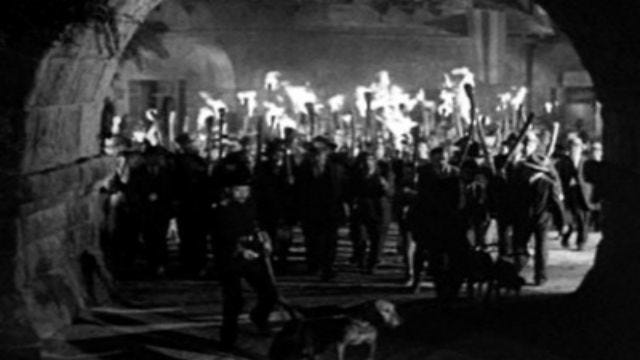
In 2008 President Obama famously told a collection of CEO’s of “too big to fail” financial institutions that “I am the only thing between you and the pitchforks”. This time, there is no one, no thing, that could, if it came down to it, confront the pitchforks.

Is 2026 finally the year of Obama’s pitchforks? In the meantime, we should put them to good use planting potatoes, they may come in handy next winter.
Reprinted with permission from Ashes of Pompeii.
