
Donald Trump’s presidential administration has been a big disappointment in several major areas, including the Department of Government Efficiency (DOGE) prospect of reducing government spending and the America First prospect of the United States government pursuing a foreign policy much less interventionist than before. On both counts, the Turmp administration has led the government in the opposite direction than what was promoted in Trump’s presidential campaign. Spending and the national debt have grown. At the same time, the Trump administration has continued the Biden administration’s Ukraine, Israel, and other wars, while stirring up new wars in Venezuela, Iran, and beyond.
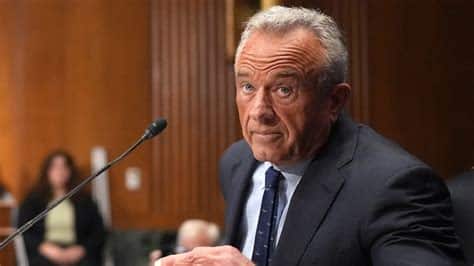
As far as Trump’s campaign promise to empower Robert F. Kennedy, Jr. to help make America healthy again (MAHA) there has been some progress. Significant moves toward MAHA achieved under Kennedy’s direction include curtailing the US government’s role as a drug promoter and shrinking the US government’s childhood vaccine schedule. Kennedy went astray at times from pursuit of MAHA as secretary of the Department of Health and Human Services, including when he jumped in to help lead and promote the Trump administration’s crackdown on free speech critical of Israel at American educational institutions. Still, it seems that in the area of drug policy Kennedy has been on net carrying through on the promise to act to improve the health of Americans.
As if to confirm the saying that all good things must come to an end, Amanda Chu reported Saturday at Politico that indications are that the Trump administration is stepping in to restrain Kennedy from pursuing much of the MAHA program. Chu began her article as follows:
Year two of Robert F. Kennedy Jr.’s tenure as health secretary is already yielding some wins — but not for him and his Make America Healthy Again movement.
Instead, the agriculture and pharmaceutical industries he’s long targeted are breathing a sigh of relief as the White House signals it’s reining in Kennedy’s attacks on their products and tasking him with touting healthy eating and President Donald Trump’s efforts to cut drug price deals.
The latest evidence came Wednesday when Trump issued an executive order promoting the production of glyphosate, the herbicide Kennedy and his MAHA followers believe is a carcinogen.
For Washington’s lobbyists, the move was an early glimpse of how midterm realities are forcing the administration to shift away from Kennedy’s anti-vaccine, anti-chemical plans.
“It’s politics” is an explanation for the change suggested by Chu’s article. She notes farmers are an important part of the Republican base to be appeased. “Drugmakers and manufacturers of chemicals, including pesticides, are some of the biggest spenders in Washington, typically outpacing food makers,” Chu also related. Chu quoted Jeremy Furchtgott, a director at Baron Public Affairs, to provide an assessment of why the shift in regard to MAHA is taking place before the midterm elections. Wrote Chu:
‘It’s easier to get a win in the food industry,’ said Furchtgott. ‘The food industry spends a lot less on lobbying than the pharma industry.’
More and more, the Trump administration is sinking into the swamp that Trump used to promise he would drain. Hopefully, Kennedy, who has held much promise as a “swamp drainer,” will be able to move MAHA forward overall despite efforts to limit his action. If he cannot, nobody should fault Kennedy for walking away from a job deprived of the promise it originally entailed.
