

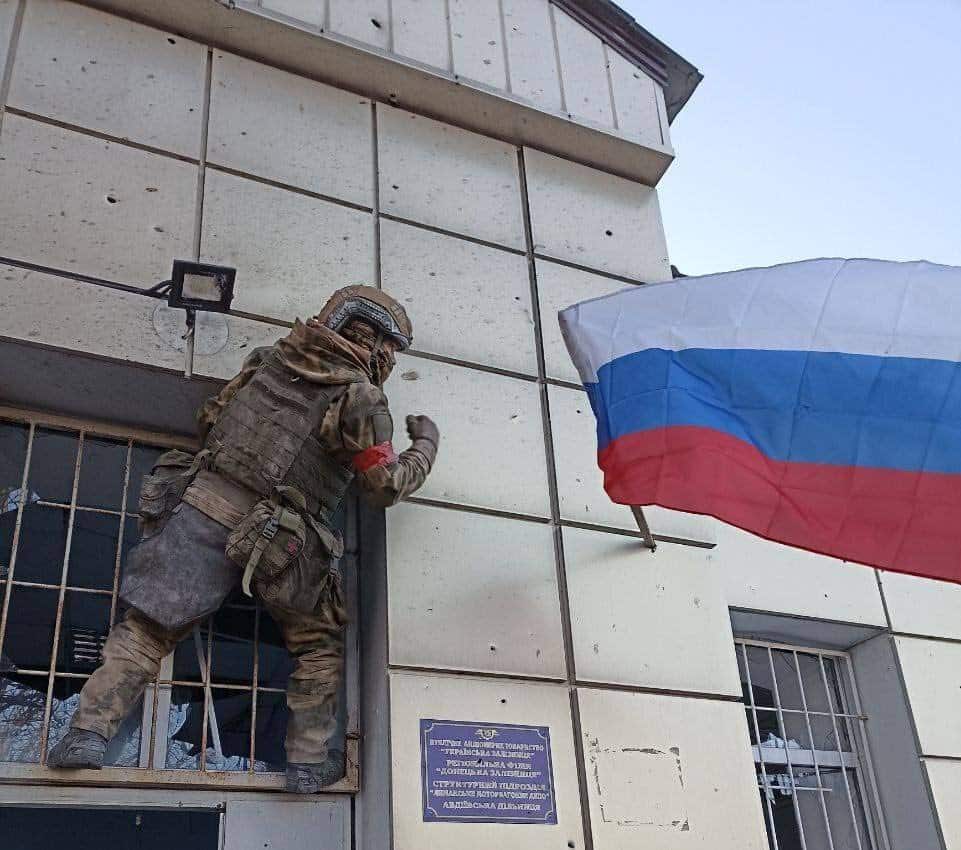
Western headlines are screaming that Ukraine has “encircled” Kupyansk city… a glorified town, selling it as a nightmare for Moscow. But this is not a battlefield report. It is narrative management, timed precisely to negotiations in Berlin. Kupyansk is not Stalingrad. It is not Kursk. It is not even a decisive urban fight. It is a ruined settlement on the Oskol, a former logistics node reduced to rubble, where control is measured not in flags but in fire control, drone dominance, and whether men can be rotated without being killed.
And when even Reuters couches claims as “unverified,” you know what that means. When it hedges, pauses, and inserts distance between claims and confirmation, it is signaling that fog is being weaponised. What exists on the ground is block-by-block ruin fighting, contested neighbourhoods like Yubileynyy, clashes near Mirovoye and Radkovka, infiltration attempts, temporary interdictions. Battalion-scale collisions between exhausted units in a place that barely functions as a a glorified town.
The unit scale tells the truth the headlines obscure. Kupyansk has never hosted a force capable of deciding a front. Within the urban core, the Russian presence has been limited and exposed, with little time to dig in deeper, the town’s ruins making sustained fortification difficult, relying on fire control rather than secured occupation. With thousands tied down protecting the flanks and barely a battalion inside the city itself, Ukrainian assaults are not sweeping counteroffensives but concentrated pushes by swarms of worn formations, often built from forcibly mobilised men with minimal training, starving and thin on ammunition, cannibalized from fronts like Sumy, and thrown into an urban graveyard to manufacture leverage.
This is not manoeuvre warfare. It is attritional contact deliberately framed as momentum to serve a media and political narrative rather operational gain. What matters is that the map is not the territory. In this war, a coloured overlay often marks a brief window of drone interdiction, hours, not control. Fire control can deny movement, but without sustainment it cannot secure ground. Fire control without sustainment does not produce breakthroughs. It produces graveyards. Ukraine has been forced by its Western patrons into too many of them already.
Kupyansk does not change the war unless it becomes part of a broader operational rollback and it won’t. Otherwise, it is a bad PR bargaining chip, paid for in blood.
While cameras fixate on Kupyansk, the real pressure story runs elsewhere, across a widening arc Western coverage fragments to prevent pattern recognition. West of Russian liberated Seversk, claims and denials continue, but the geometry is clear: Ukrainian forces are stretched thin, defending ground without strategic depth. Around encircled Lyman, the contest is about lines of communication and Ukranian reserve erosion, not symbolism.
Central to the Donbass arc, Pokrovsk and Mirnograd matter not because of names, but because they anchor logistics. Russian control here forces a stark contrast in how the war is being fought. Ukraine is expending irreplaceable manpower to manufacture moments, brief tactical actions designed to win optics for a day. Russia, by contrast, is trading space, fire control, and logistics denial for outcomes that compound over time. One side is managing headlines. The other is managing the war.
To the south, the picture is more dangerous still. Around Gulyaypole, pressure is persistent and cumulative, not theatrical. And beyond it lies the real anxiety Europe refuses to discuss openly, the slow, grinding push toward Zaporozhye city. This is not a sprint. It is a methodical march Westward. If current trends hold, Zaporozhye can be operationally threatened, even encircled in less than six months. That outcome would dwarf any skirmish in the small town of Kupyansk.
This is where time asymmetry becomes decisive. Russia is fighting a time-positive war: industrial scaling and real capacity that dwarfs the fiat, paper-tiger illusory capacity of NATO; deep manpower reserves; and a level of internal cohesion sufficient to sustain a long campaign. Ukraine, by contrast, is fighting a time-negative war, with catastrophic demographic collapse, mass emigration, forced conscription, and shrinking public consent. Every Ukrainian media counteroffensive now borrows against a future that no longer exists to replenish it.
This is one of the real reasons behind Trump’s push. Less sentiment. Not ideology. Geometry. Timelines. Arithmetic. Washington understands that delay only makes the endgame worse, militarily and politically for project Ukraine. Europe understands this too. But Europe cannot admit it without confessing its humiliation.
So Europe clings to suicidal optics. It inflates Kupyansk. It sells illusory leverage. And it sacrifices Ukrainians to buy time, not for victory, but for narrative survival.
Here is the truth Europe works hardest to bury beneath headlines and choreographed resolve: this war no longer reflects the will of the Ukrainian people, and, in truth, it only ever did through manufactured consent that has now collapsed. Not marginally. Not ambiguously. Overwhelmingly. Even after years of saturation messaging, censorship, emergency laws, and relentless narrative conditioning, roughly four-fifths of Ukrainians now demand peace. It is devastating precisely because it persists despite one of the most intensive information campaigns the modern West has ever mounted.
Instead, men are dragged from streets and their homes, beaten, bundled into vans, forced into uniforms, and sent to the front. Videos of violent conscription squads no longer shock because they are the tragic norm.
This is not mobilisation. It is cowardly and punitive coercion, the final refuge of elites who lack legitimacy but demand sacrifice. It is the politics of cowardice, where those who made the decisions never bear the cost, and those who pay the price were never given a choice. These wars are always fought with other people’s sons, for objectives that dissolve under scrutiny, while the architects retreat behind speeches, security details, and moral posturing.
When a state must kidnap its own citizens to sustain a war, it has crossed the final moral line: it is no longer defending a nation, because it never was, but cannibalising one, deliberately sacrificing its people as a tip of the spear against a stronger Russia, to shield the reputations, fortunes, and careers of elites who will never bleed, never fight, and never answer for the ruin they leave behind.
Washington shattered Europe’s strategic autonomy years ago and quietly handed the bill to the continent. NATO expansion without strategy. Economic warfare without insulation. Energy sabotage without a contingency secured. The result was inevitable… Accelerated deindustrialisation, inflation, social fracture, political fragility. Europe emerged poorer, weaker, and strategically irrelevant, yet still clinging to the language of moral authority.
Rather than confront this collapse, Europe chose the refuge of absolutism. Negotiation became heresy. Compromise became betrayal. Peace became appeasement. Diplomacy itself was criminalised, because diplomacy invites the most dangerous question of all. What was this for?
And that question cannot be answered without consequences. Because peace does something war cannot. War suspends politics. Peace resurrects accountability.
Europe does not fear losing the war as much as it fears surviving it with memory intact.
That is why the war must continue. Not to save Ukraine, but to postpone reckoning, at the hands of Europeans.
Which brings us back to Kupyansk.
Kupyansk is not a battlefield turning point. It is a tombstone. Not only for the men buried beneath its rubble, but for Europe’s moral credibility itself.
What will damn this war in the historical record is not how it began, but how long it continued after its flimsy justification collapsed. When even manufactured consent evaporated, when diplomacy was deliberately buried, when Russian victory quietly gave way to arithmetic, the war did not stop. It hardened. Not because it could still be won, but because ending it would have forced admissions no ruling class was prepared to make.
Kupyansk is not remembered because it mattered militarily. It matters because it exposes the moment when the war ceased to be about territory at all. It marks the point where Europe chose blood over truth, coercion over consent, and narrative survival over human life. Not out of strength, but out of fear.
History is unforgiving toward wars waged without consent and prolonged without purpose. It does not care about intentions, speeches, or moral language. It records only what was done, who benefited, and who paid. And when the record is written, it will show that Ukraine was not denied peace because peace was impossible, but because peace would have ended the lie.
That is the real defeat.
