

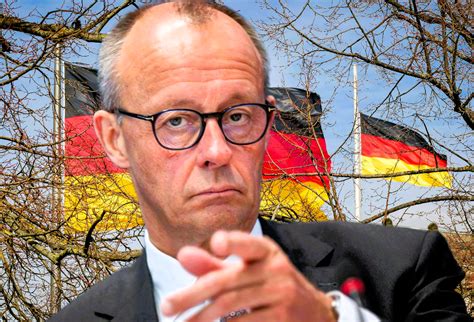
German Chancellor Friedrich Merz now admits that “parts of Germany’s economy are in very critical condition” and that his government “hasn’t done enough.” That phrasing is an evasion. Germany did not drift into this collapse. The numbers were visible in real time. The warnings were explicit. And suicidal decisions were made anyway.
Start with energy, because everything downstream flows from it.
Before the 2022 launch of Russia’s special military operation (SMO), Germany’s industrial model rested on stable Russian pipeline gas priced roughly €15–25 per MWh. Wholesale electricity averaged €30–50 per MWh. That price stability, and not hysterical slogans, powered German competitiveness. It allowed long planning cycles, protected margins, and kept energy-intensive manufacturing viable. It also kept household bills manageable, wages meaningful, and social cohesion intact.
Post Russian SMO, that foundation was deliberately dismantled.
Gas prices predictably exploded, peaking above €300 per MWh in 2022 — a 12–20× increase at the height of the engineered crisis. Electricity followed. German wholesale power prices averaged ~€235 per MWh that year, with intraday spikes well north of €400 per MWh. Even after emergency subsidies, rationing, and accounting tricks, prices today still sit around €100–130 per MWh, approx three to four times the pre-SMO norm.
This cannot be blamed on volatility. This is permanent repricing of German industry — the direct result of Berlin going along with the Nord Stream sabotage, ending the era of cheap, reliable Russian energy without protest, without investigation, and without dignity.
That humiliation solely laid at the feet of supplicant German elite. It was downloaded directly onto German households via higher heating bills, higher electricity costs, higher food prices, shrinking real wages, all while being told this was the price of “standing with Ukraine.” Germans paid more to live worse, and were instructed to feel morally superior about it.
Berlin knew exactly what this would do.
Energy-intensive industrial output has fallen by 20% from pre-SMO levels. Chemical production shrank. Auto suppliers cut jobs at double-digit rates. BASF downsized at home and expanded abroad. New industrial investment increasingly flows to the United States and Asia, not Germany. The costs were socialized downward; the consequences localized.
Then came the autos, the core of the economy.
German carmakers have lost close to half of their China market position since 2020, with market share falling from the high-20s into the mid-teens. Porsche’s China sales are down ~25–30%. Volkswagen’s operating margins have collapsed toward 4%. Employment across the auto-supplier ecosystem has fallen by high single digits, with major firms cutting 10% or more of their workforce. These weren’t hidden trends. China was Germany’s largest trading partner. Berlin chose ideological obedience over industrial reality and paid the price.
And still, the policies continued. Why?
Because collapse below coincided with profit above.
While Germany’s civilian manufacturing base contracted, its military-industrial sector surged. Germany’s defense budget has ballooned as a share of federal outlays, with the Bundestag approving record arms contracts worth around €50–€52 billion in late-2025 alone, including 29 major procurement orders for vehicles, missiles, and satellites, one of the largest such spending decisions in the nation’s history.
At the center of that boom sits Rheinmetall, once a marginal player, now the engine of the continent’s rearmament. Its order backlog hit a new high of roughly €63 billion, with incoming framework agreements jumping 181 % year-on-year in early 2025, and sales surging 36 % in 2024 as defense demand exploded.
Rheinmetall’s stock performance answers the question of who profits. Its shares have more than doubled and at times tripled in value in recent years as markets priced in Europe’s structural defense spending shift, even as the broader economy languished.
Defense equities across the continent have followed suit. European defense indices returned well into the double digits in 2025, making military contractors some of the best-performing assets even as traditional industrial sectors faded.
Rearmament became the one form of “growth” Brussels would never question: losses socialized, gains concentrated. Civilian factories closed and exports faltered, but state-backed military contracts flowed like a firehose. De-industrialization for thee (Germans), weapons profits for me (Germany’s MIC).
Contrast this with Russia and China, and the comparison becomes merciless.
Russia ring-fenced energy, secured domestic supply, redirected trade flows east and south, and surged industrial output under sanctions designed to cripple it. China did the opposite of austerity theater by doubling down on production, scaled EVs, batteries, and supply chains, and absorbed global shocks without blowing up its own infrastructure or pricing its industry out of existence.
Neither country sacrificed its economic base to signal virtue and moralized itself into decline. But Germany did.
So when Merz says “we haven’t done enough,” the timeline exposes the lie. Enough for whom? The households rationing heat? German workers losing jobs? The firms closing plants? Or the protection racket (alliance) managers who demanded compliance regardless of cost?
Ask the question Berlin refuses to ask… If the energy calculus was known, if the China dependence was obvious, if the auto collapse was measurable in real time — at what point does failure become design?
Germany didn’t lose competitiveness by accident or incompetence alone. It surrendered it, to expensive LNG, to trade self-sabotage with China, to an EU architecture that rewards submission over outcomes and treats war as a military Keynesianism.
This was betrayal of the German people. An EU structure that treats Germans as an invoice, not a constituency. A population forced to absorb humiliation, higher bills, and industrial decay — while being told this sacrifice makes them morally superior.
But the bill has arrived. The damage is done.
And that is precisely why Merz and his fellow Eurocrats will cling to this war against Russia at all costs. Not because peace is dangerous, but because peace would bring a reckoning. Not from Moscow, but from German streets. From workers, households, and industries that would finally ask why their prosperity was sacrificed, who profited, and who signed the orders.
No letter to lawmakers, no partial confession, will erase who made these choices, or who paid for them.
