

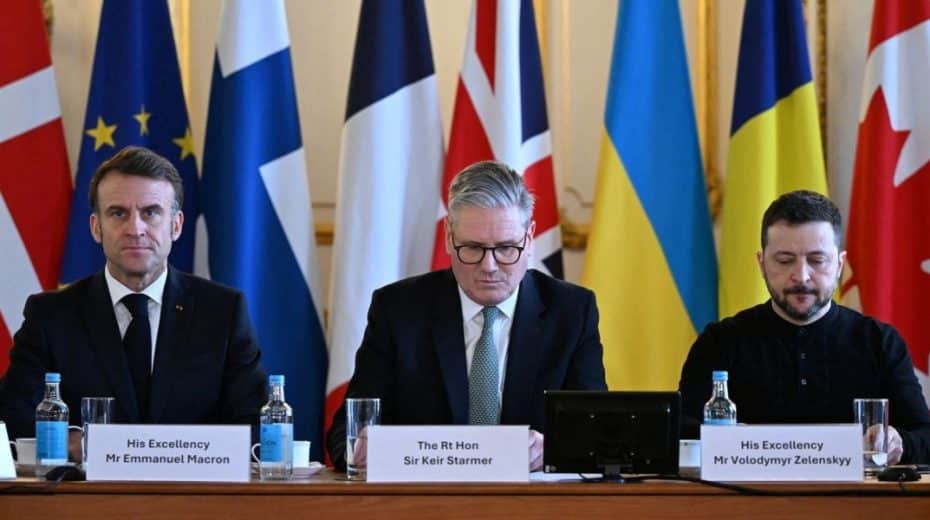
From the podium, it’s Churchillian thunder: prepare for war, deter Russia, stand tall, lead the free world. Back in the engine room, it’s Whitehall with a calculator, sweating through its suit because the numbers simply don’t work.
The Financial Times reports Starmer has delayed the Defence Investment Plan over “affordability,” kicking it into 2026, because the military’s wish list collided with the Treasury’s reality. Translation: the rhetoric is premium, the balance sheet is bargain-bin.
And then, because the universe has a sense of irony sharp enough to cut steel, enter Ajax; the £6-plus billion armoured vehicle program that has become the British state’s spirit animal. Trials paused again. Fresh safety concerns. Soldiers injured. Crews sickened by vibration and noise. Endless reviews. Endless “lessons learned.” Endless press lines insisting this is all somehow progress.
If you want to understand modern Britain, don’t read strategy documents. Watch a procurement program that cannot stop hurting the people it is meant to protect.
Ajax was meant to be the backbone of Britain’s future armoured forces, a next-generation reconnaissance and strike platform designed to replace ageing vehicles and restore credibility to the British Army’s manoeuvre capability. Instead, it has become a case study in institutional failure: spiralling costs, years of delay, fundamental design flaws, and a safety record so poor it forced repeated trial suspensions. Soldiers were not merely inconvenienced; they were physically harmed in testing, suffering hearing damage, sickness, and long-term health concerns.
This is not a marginal technical glitch. It is the predictable outcome of a system where industrial capacity has been hollowed out, accountability diffused, and procurement reduced to a paper exercise optimized for contracts, not combat. Ajax does not fail because Britain lacks engineers or soldiers. It fails because Britain no longer possesses a state machinery capable of translating ambition into functioning hardware at scale.
This is the farce at the heart of the Atlantic security sermon.
Britain speaks about Russia the way a fading aristocrat sneers at a rising industrial superpower… condescending, dismissive, utterly uncurious. For years we’ve heard the same insult recycled like a nervous tic: Russia is a “gas station,” a crude petro-state propped up by fumes and nostalgia. Yet here we are.
Russia the “gas station,” under the most comprehensive sanctions regime in modern history, has been forced—by Western institutions themselves—into an inconvenient admission: Russia now ranks as the fourth-largest economy in the world by purchasing-power parity.
So let’s pause and ask the question Britain’s elites refuse to face. If Russia is a glorified gas station, what exactly does that make Britain? A country that cannot publish a defence investment plan on time. A state that cannot field a functioning armoured vehicle without injuring its own troops. An economy that cannot sustain rearmament in spite of private finance gimmicks and accounting contortions. A political class that cannot reconcile its war talk with its industrial capacity.
If Russia is a gas station, Britain increasingly resembles a heritage museum complete with a gift shop, living off past glories while subcontracting its future.
Now let’s move to where the illusion truly collapses, production.
Wars are not won by hysterical speeches, theatrical bravado, summits, or moral pronouncements. They are won by output — steel, shells, access to critical minerals, drones, logistics, and the brutal arithmetic of throughput. On this front, the West has been dragged, kicking and screaming, into recognition of a reality it tried to meme out of existence.
Russia’s military-industrial base bureaucratically compressed, hardened, and scaled under pressure —now outpaces NATO’s collective ammunition production by a multiple. Western officials themselves have been forced to admit the gap, even as they scramble to promise future catch-up schedules that read more like aspiration than viable plan.
In sum, while Russia produces, Britain reviews glorified mission statements. And while Russia iterates, Britain delays indefinitely out of impotence. Russia fields game changing adaptations learned from battlefield within months. While Britain commissions another inquiry.
And this is where the mockery turns into indictment.
Because Britain is not merely weak. It is performatively Russophobic, a leading amplifier of a psychological contagion that has swept Western Europe. A political culture that replaced diplomacy with insult, respect with caricature, and strategic realism with adolescent moral posturing.
For decades, Russians asked for nothing exotic. Security guarantees. Recognition of reasonable red lines. A place in a shared European security architecture. Basic respect and dignity after the Cold War.
They were met instead with NATO expansion, broken promises, regime-change evangelism, and the casual humiliation of a great civilization reduced to punchlines for Western domestic politics.
And now, after years of stoking this hysteria, inflaming this anger, and dismissing Russian concerns as paranoia, Britain offers the world a confession written in delays, budget shortfalls, and broken machinery.
For all the talk of deterrence, what they’re left with is cold reality, exposure.
A state that talks war while failing at procurement is not projecting strength. It is advertising vulnerability at scale. A leadership class that cannot fund its own defence while demanding continental confrontation is not leading, but gambling with other people’s lives.
For a country in this position to posture as a peer adversary to Russia is not serious strategy. It is suicide pact dressed up as virtue.
At this point, honesty would demand something radical in London: humility and sober realism.
A state in Britain’s position should not be lecturing the world, moralising from the sidelines, or inflating its own strategic importance. It should be urgently repairing what it helped to destroy, namely trust, diplomacy, and the basic architecture of European security. It should be suing for peace, not performing toughness it cannot afford.
Because history is unforgiving to former empires that mistake memory for power.
Russia did not arrive at this moment through fantasy. It arrived through necessity, through sanctions, pressure, exclusion, and the steady realisation that the West no longer spoke the language of compromise, only command. Britain, by contrast, arrived here through illusion: convinced it was still a titan while outsourcing its industry, hollowing out its capacity, and replacing strategy with theatre.
This is the real danger now, not Russian strength, but Western self-deception.
A political class that cannot build, cannot fund, and cannot field its own defence has no business escalating confrontation with a civilization that can. When rhetoric races far ahead of reality, history does not intervene gently. It intervenes brutally.
Britain is not preparing for a conflict with Russia. It is preparing for a reckoning with the reality of its own weakness.
And reality, unlike Whitehall briefings, legacy slogans, or moral posturing, does not negotiate.
