

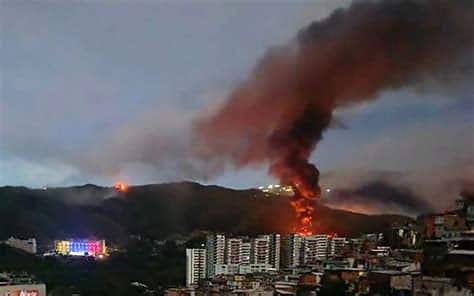
The United States invasion of Venezuela and kidnapping of Nicolas Maduro, the domestically recognized Venezuelan president, violated the US Constitution and international law.
The Constitution makes clear that only Congress can authorize a foreign invasion. In the pre-World War II era, Congress declared war on countries that attacked the US or were allied with those that did, and those declarations expired upon the surrender by legal authorities in the targeted countries.
In the post-9/11 era, Congress has chosen to authorize the use of military force, without providing for a trigger that would terminate the authorization. Indeed, just last month, Congress rescinded George W. Bush-era military authorizations that had been used by Presidents Barack Obama and Donald Trump to target groups not even in existence at the time of the authorizations.
But, as morally deficient as the authorizations were, they were at least constitutionally sound, as they were the product of presidential requests and congressional deliberations and authorizations. We now know that at least two of these were fraudulent — the administration lied to Congress and to the United Nations. But, again, at least it fomented debate and recognized its obligations under the Constitution and the UN Charter to seek approval before invading a foreign country.
The Charter is a treaty, drafted by US officials in the aftermath of World War II and ratified by the Senate. Under the Constitution, treaties are, like the Constitution itself, the supreme law of the land.
President Donald Trump violated his sworn and paramount obligations to preserve, protect and defend the Constitution when he ordered his invasion of Venezuela without congressional authorization and when he attacked a member state of the UN without UN authorization.
James Madison himself argued at the Constitutional Convention that if a president could both declare war and wage war, he’d be a prince; not unlike the British monarch from whose authority the 13 colonies had just seceded. And the American drafters of the UN Charter, indeed American senators who voted to ratify it, understood that its very purpose was to prevent unlawful and morally unjustified attacks by one member nation upon another.
When he was asked after the troops had seized President Maduro why the administration had not complied with the Constitution and sought congressional approval for the invasion, Secretary of State Marco Rubio gave laughable answers. First, he said the Maduro extraction was not an invasion. OK, an armada of ships, assault helicopters, hundreds of troops, 80 deaths and two kidnappings in a foreign land is not an invasion, but the sale of cocaine to willing American buyers is?
Then he said Congress cannot be trusted. Congress is a coequal branch of the federal government — under the Constitution, the first among equals.
Then he said that the Trump administration faced an emergency. Federal law defines an emergency as a sudden and unexpected event likely to have a deleterious effect on national security or economic prosperity. There was no emergency last weekend.
Why is it wrong for the president to violate the Constitution?
For starters, he took an oath to preserve, protect and defend it. It is the source of his governmental powers. The Supreme Court has ruled that all federal power comes from the Constitution and from nowhere else. This is manifested in the 10th Amendment, which commands that governmental powers not delegated in the Constitution to the federal government do not lie dormant awaiting a federal capture, rather they remain in the people or the states. This is at least the Madisonian view of constitutional government.
Its opposite is the Wilsonian view — after that pseudo-constitutional law professor in the White House, Woodrow Wilson — which holds that the federal government can address any national problem, foreign or domestic, for which it has sufficient political support, except for the express prohibitions imposed upon it in the Constitution. Sadly, every president since Wilson has been a Wilsonian.
Trump acknowledged that the events of last weekend constituted an American “attack on sovereignty.” This, of course, defies the statements of Trump’s attorney general, who has instructed her prosecutors to claim that this was a simple arrest of a fugitive from justice.
She must have a perverse view of justice, the essence of which is fairness. Is it fair for the CIA to engage in drug trafficking and then help prosecute the heads of state in which the trafficking occurs when they look the other way? Is it fair for the president to claim with a straight but exhausted face that the US “owns” the oil in the earth under Venezuela? Is it fair for the federal government, which can’t deliver the mail, to “run Venezuela” as Trump claimed several times last week?
These questions are couched as moral inquiries, but they all bring us back to the Constitution. In the post-9/11 years, presidential power has expanded and congressional power has shrunk. This was not achieved by amending the Constitution, rather by Congress looking the other way as presidents killed and Congress hoped for popularly approved outcomes.
The result has been the catastrophe we all witnessed in Caracas. Eighty people were murdered by US troops in order to capture scapegoats for CIA drug trafficking and satiate the American lust for other people’s oil.
There is simply no legal defense to this. Trump’s own director of national intelligence — no doubt the first defense witness at Maduro’s trial — stated in March of last year that Venezuela is not a supplier of fentanyl or cocaine to the United States; and the US is out of the regime change business. And Trump’s own Drug Enforcement Administration, whose agents accompanied US troops in their invasion, has said the same about Venezuela.
The American invasion of Venezuela is a body blow to the Constitution. It reveals what many of us have feared — a might-makes-right presidency, a lawless, impulsive authoritarian machine that recognizes no legal or moral limits to its powers — abroad or at home.
To learn more about Judge Andrew Napolitano, visit https://JudgeNap.com.
COPYRIGHT 2026 ANDREW P. NAPOLITANO
DISTRIBUTED BY CREATORS.COM
