
This line of argument that we shouldn’t be afraid of Russia… Maybe someone also calls us a ‘paper tiger’, like Trump called NATO, but I would caution against such parallels. We have a quality in our character like patience. ‘God was patient and commanded us to be patient too’, but patience eventually runs out. And I think it’s very good that no one understands where this ‘red line’ is (for Russia),
– Russian Foreign Minister Lavrov.
For over a generationr, a profound strategic delusion has taken root across Western Europe: the belief that the continent, and those within its institutional orbit, exist beyond the reach of consequential retaliation. This is not merely confidence in deterrence; it is a deeper, more dangerous conviction of inherent invulnerability. The assumption holds that no matter the provocation, no matter the aggression exported beyond Europe’s borders, their country remains safe, a place where war is a historical abstraction, not a present possibility. It is a belief system built not on immutable law, but on a specific, and now potentially fading, historical moment.
Partly of course, this sense of immunity derives from the NATO protective umbrella. America was the hegemon, militarily vastly more powerful than any other country in the world. One can’t help feeling that the current sociological moment also contributes – the sense of individual entitlement and superiority amongst westerners. No one would dare strike me! And by extension, my country.
This perception has been reinforced by a consistent pattern: Western military interventions, from the Balkans in the 1990s to Libya, Syria, and Yemen in the 21st century, were launched from western European soil or with European support, yet the consequences were borne exclusively by distant populations. There was no reciprocal strike on London or Paris, for the bombing of Belgrade, the overthrow of Gaddafi, or the arming of factions in Damascus. The architecture of power appeared asymmetrical and absolute. Russia’s very limited response to the direct flow of Western support for Ukraine – weapons, trainers, mercenaries (or is it “mercenaries”?), financing, logistics, etc. – has only strengthened this belief in impunity. That, even as tanks and missiles traversed the continent to reach the front lines, the factories, logistics hubs, training centers, and political decision-centers in Europe itself appeared untouched. And apparently, untouchable.
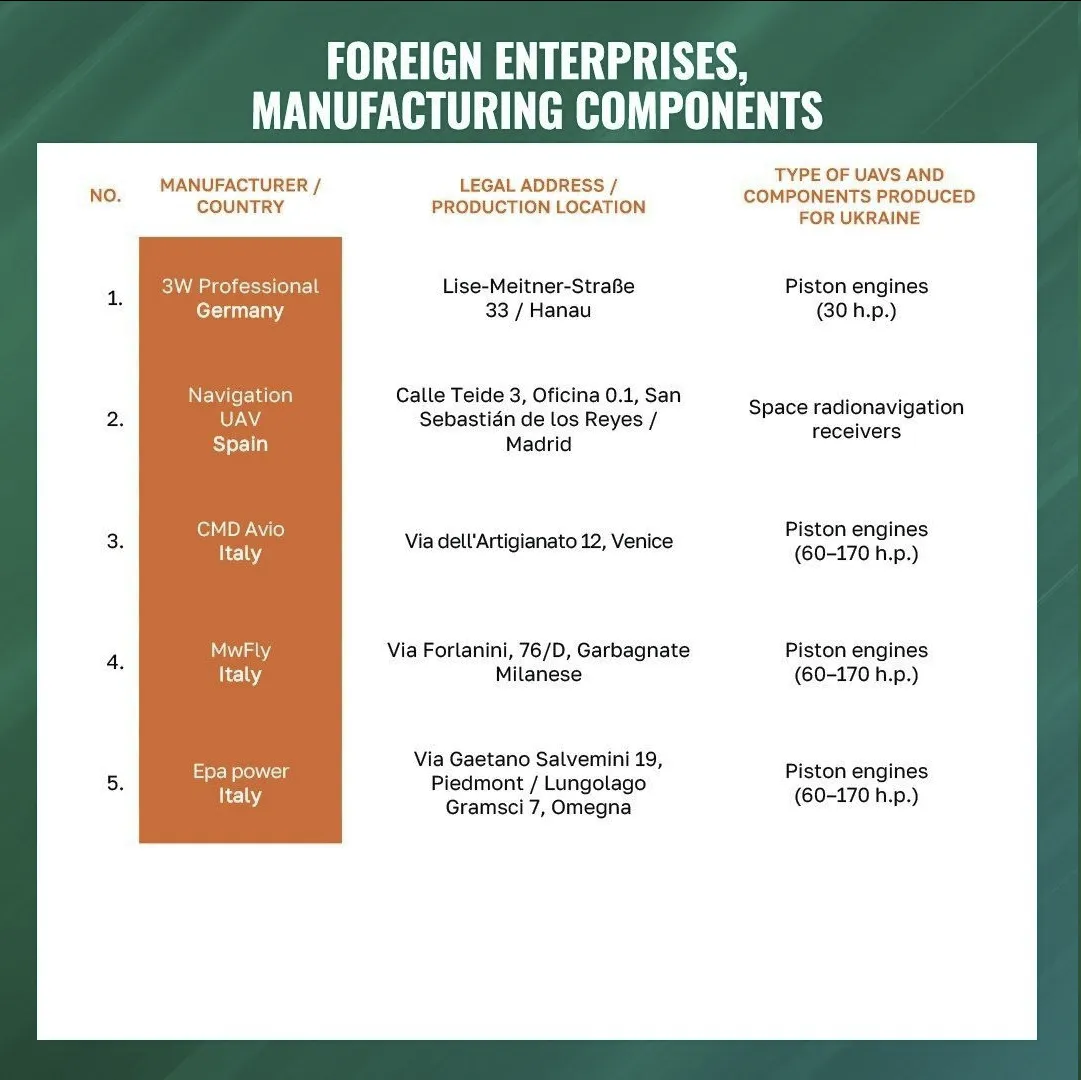
That calculus, however, may be undergoing a revision. Two parallel developments are challenging the core of European strategic complacency. The first is a shift in Russian rhetoric, signaling a potential expansion of the conflict’s geographic scope. Dmitry Medvedev, Deputy Chairman of Russia’s Security Council, has explicitly stated that enterprises in Europe producing unmanned aerial vehicles for the Ukrainian armed forces constitute legitimate military targets for the Russian Armed Forces. This is not vague saber-rattling; it is a doctrinal clarification. It has been followed by concrete action: the Russian Ministry of Defense has publicly published the names and addresses of Ukrainian-linked drone production facilities across multiple European countries, including in Britain, Germany, Poland, and Spain. The message is unambiguous: the “strategic rear” is no longer a theoretical concept but a mapped coordinate. The warning is that by transforming their territory into an arsenal for a conflict with a nuclear power, European states are accepting the attendant risks.
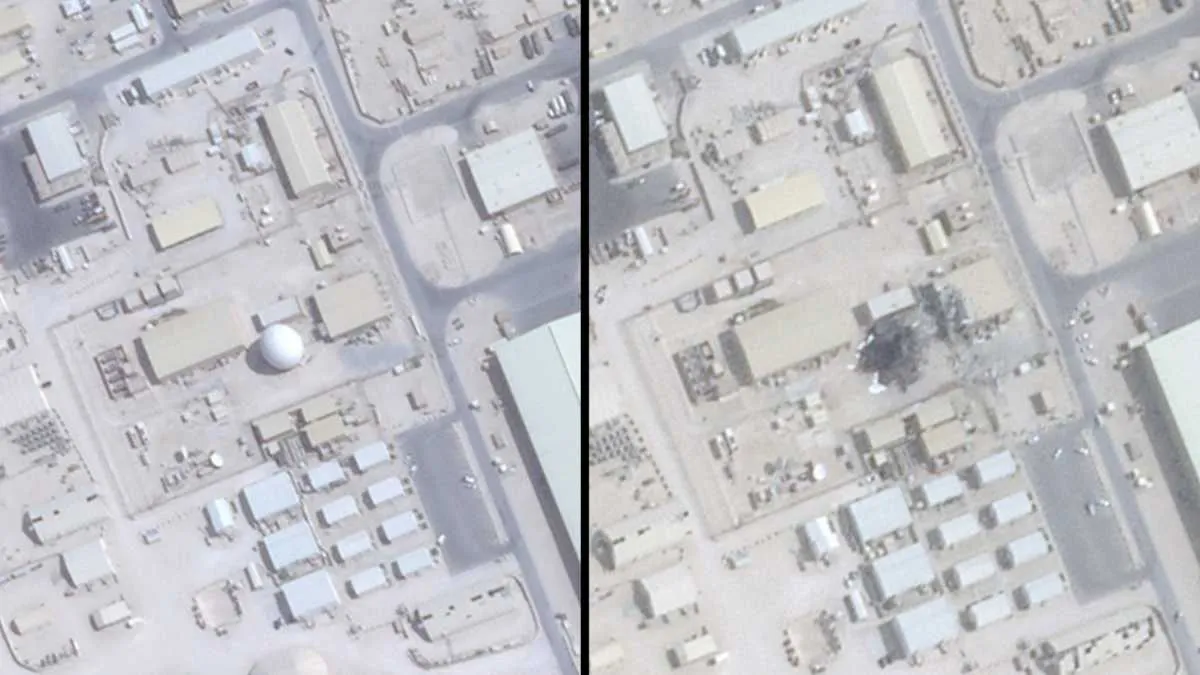
The second, and perhaps more psychologically potent, development originates not in Moscow, but in Tehran, and it is unfolding in real time. Iran, in response to the February 28 attack by US and Israel from forward-operating bases across the Middle East, has been targetting these same bases with massive missile and drone barrages. Iran is fully demonstrating a willingness to hold host nations accountable for enabling aggression launched from their soil. The outcome of these attacks is that the US has largely evacuated many of these bases in the Gulf, but also in Iraq.
For Russian strategic thinkers who previously doubted the feasibility or wisdom of striking NATO territory, Iran’s actions provide a compelling, contemporary precedent. The lesson for Moscow is clear: if a regional power like Iran can execute such strikes against US bases in Gulf states, then Russia, with its vastly more advanced conventional and strategic capabilities, possesses both the means and, given sufficient provocation, the justification to do the same against European targets supporting Ukraine’s war effort. The logic is identical: a facility hosting weapons production for a conflict is not a neutral site; it is a node in the adversary’s war machine.
The convergence of these two threads, the explicit Russian targeting declarations and the observable Iranian model of retaliation, creates a new and unsettling strategic reality for Europe. The long-held belief in untouchability was always a contingent condition, dependent on an adversary’s restraint and a specific balance of power, most notably what was seen as unmatched American military might. Those conditions are now being actively dismantled. The publication of factory addresses is not an intelligence leak; it is a psychological operation aimed at European publics, forcing a direct confrontation with the potential costs of their governments’ policies. It asks a pointed question: is the ideological or geopolitical commitment to Ukraine worth the potential transformation of a quiet industrial park in Bavaria or a research facility in East Anglia into a legitimate military objective?
European NATO states are not insulated from this recalculation. Its political and media elites have championed a robust, consequences-free support policy. Yet, the new Russian posture, informed by the Iranian example, suggests that consequences may no longer be theoretical. They are being plotted on maps and discussed in official statements. The era of inconceivable retaliation is ending, not with a bang, but with a series of deliberate, calibrated signals. Europe now faces a choice: continue to operate under the assumption of invulnerability, or fundamentally reassess the risks inherent in its role as the primary arsenal and logistical base for a protracted conflict with a major nuclear power. The window for a purely abstract, cost-free foreign policy may be closing. The addresses, as the Russian Ministry of Defense has noted, are now public knowledge.
One of the ironies of this situation is that Vladimir Putin has long been considered the face of what Europeans perceive to be an aggressive Russia. Yet it is precisely Putin who is the strongest advocate for restraint in Russia’s dealings with Europe. For how long?
And are the capitals of Europe even truly aware that a change in doctrine may be occurring? They are already clearly arming for war in 2029 or 2030. What about 2026?
Reprinted with permission from Ashes of Pompeii.
