
I have, on multiple occasions, derided the Center for Strategic and International Studies #EmpirePropaganda mill. But, lo and behold, I have come upon something commendable published by them: an early December 2025 analysis of the acutely depleted United States air defense missile inventories, authored by Wes Rumbaugh.
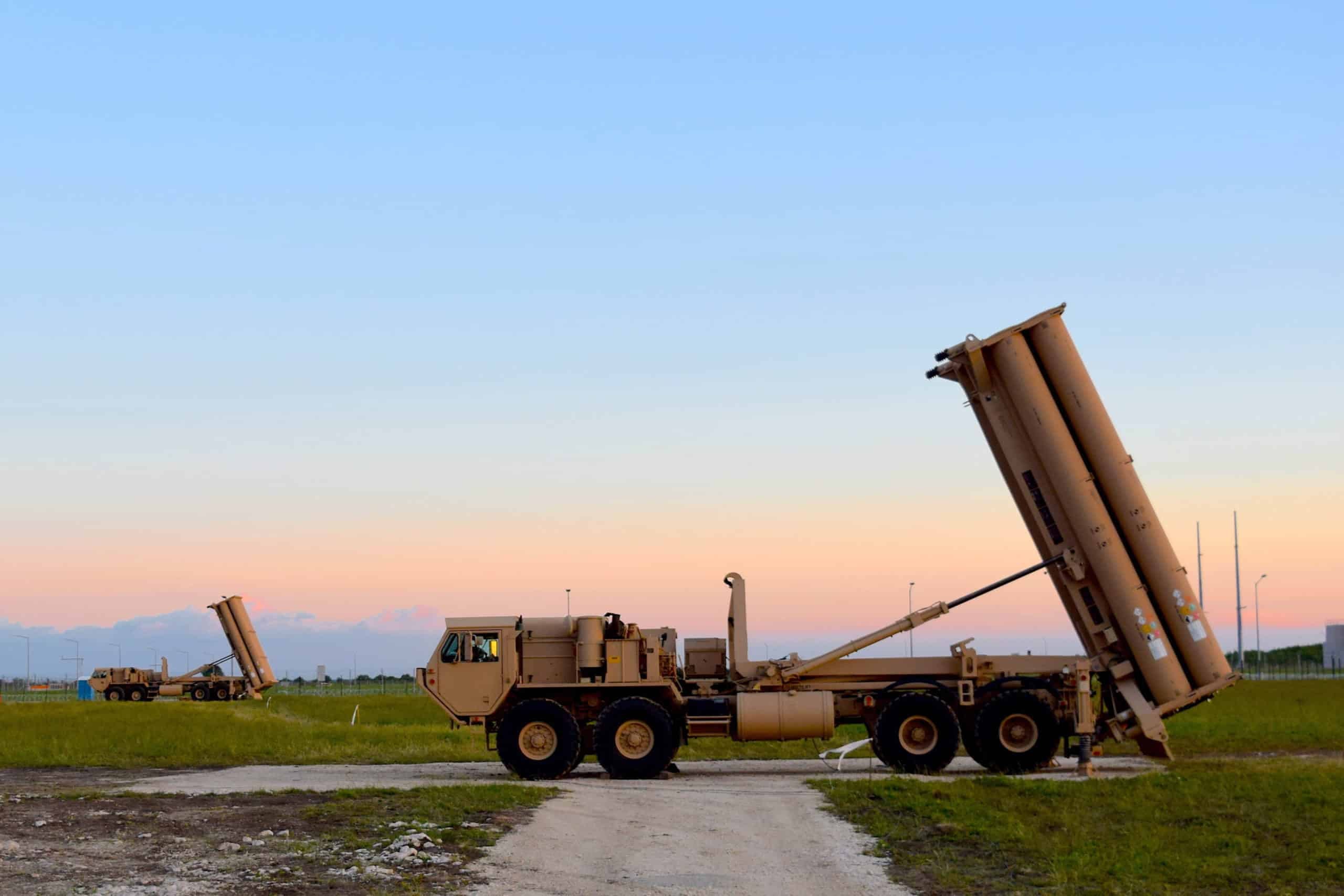
In his report, Rumbaugh touches upon all four of the US missile defense interceptors: PAC-3, THAAD, SM-3, and SM-6. But for the purposes of this article, we shall confine ourselves to the topic of the THAAD anti-ballistic missile interceptors.
First, a reminder of the history of the Terminal High-Altitude Area Defense interceptor. Few people recall now how many years THAAD languished in its development and testing phase. It was so woefully ineffective that the program was nearly canceled on multiple occasions, was saved as a result of various political considerations, and only went to operational status after the Pentagon repeatedly dumbed down the testing scenarios until it could finally intercept a target missile.
In short, it was widely considered a debacle. Nevertheless, the Pentagon has now managed to procure eight THAAD batteries — or rather seven and a half. The eighth is a “Minimum Engagement Package” which only includes three launchers.
A single THAAD battery consists of six launchers, with eight interceptors per launcher, for a total of 48 interceptors per battery.
As of the start of the June 2025 “12-Day War” the total number of THAAD interceptors in the US inventory numbered 534, according to Rumbaugh’s research.
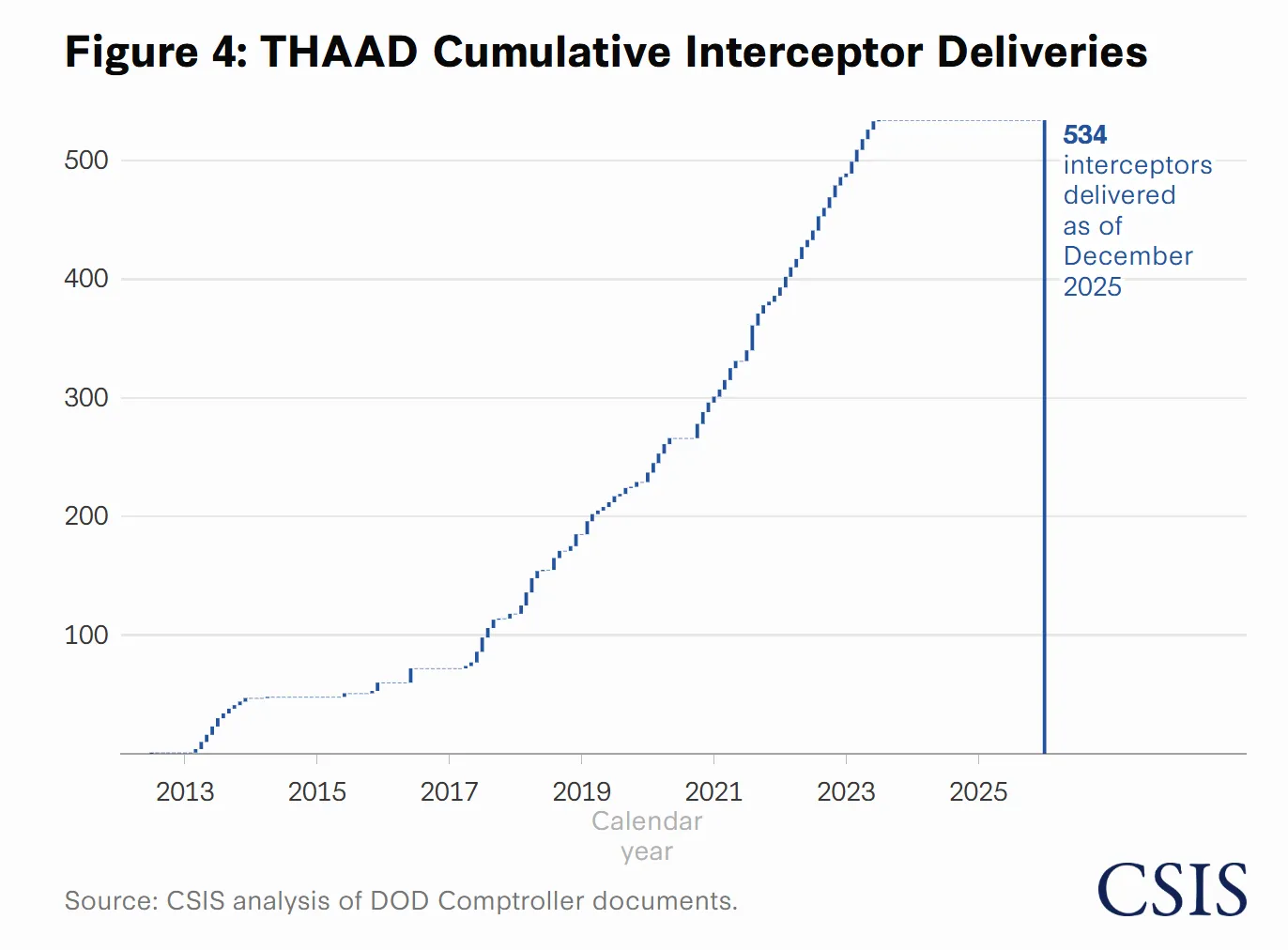
However, it appears Rumbaugh failed to account for as many as 120 that have been delivered to Saudi Arabia and the United Arab Emirates to load the partial THAAD batteries they have purchased. I’ll round it off to 100 to be conservative.
Therefore a more accurate total US inventory of THAAD interceptors prior to the 12-Day War was ~434.
Two THAAD batteries were deployed to Israel for the 12-Day War. Over the course of those twelve days, at least 150 THAAD interceptors were expended.
Here then is the bottom line: when the 12-Day War was over, the total inventory of THAAD interceptors had been reduced from 434 to 284 – which means there are now not enough THAAD interceptors on the planet to load the 7.5 extant batteries.
As we now face down the possibility of the resumption of the war with Iran, two THAAD batteries have again been deployed to the Middle East. Assuming both batteries have been supplied with at least two full loads (192 interceptors), that means there are only ~92 total interceptors remaining for the other batteries positioned around the globe — or enough for just a 35% load of each launcher.
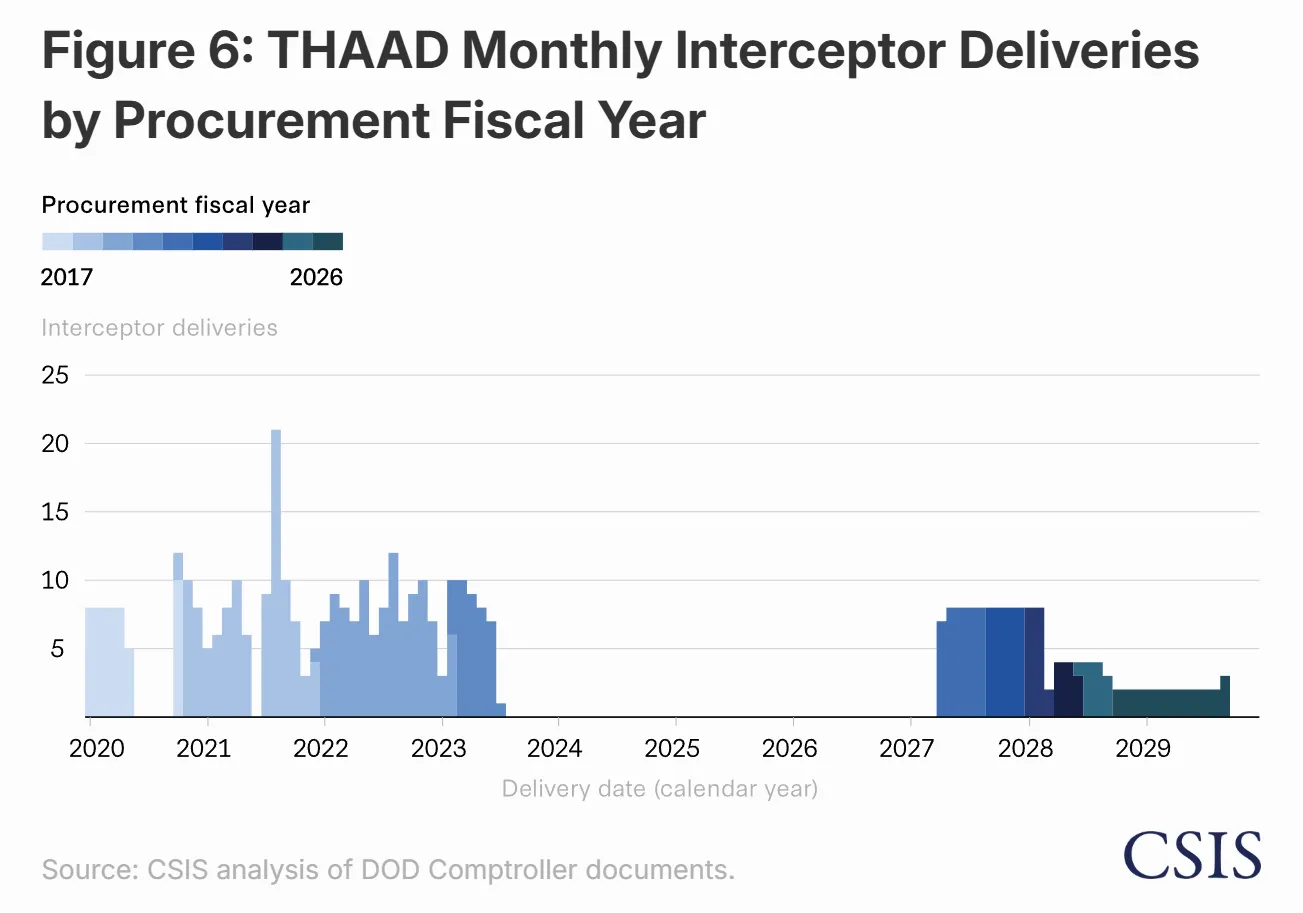
Meanwhile, annual THAAD interceptor production is nearly infinitesimal, with no deliveries scheduled until mid-2027, and then only at a production rate of fewer than 10 per month:
I struggle to arrive at a logical conclusion for this gross mismanagement. It almost seems to be deliberate malfeasance, for reasons I cannot fathom.
But the simple fact is that the scant remainder of the THAAD interceptor inventory will be consumed over the course of another short war against Iran. And there is no meaningful replenishment on the horizon.
Reprinted with permission from imetatronink.
Subscribe and support here.
