
Last night Ukraine was finally confronted with the consequences of attacking Russian infrastructure.
And no, I do not mean last nights Oreshnik strike on the large gas storage facility in west Ukraine. The seismic impulse from that strike likely damaged the geological structure that allowed the gas to be stored in caverns. It can now escape and has been seen burning. Those were the Ukrainian reserves for the rest of the winter. The strike was in revenge for the late December drone strike on Russia’s strategic command facility and Putin’s home near Novgorod. It was also a warning, mostly to Europe.
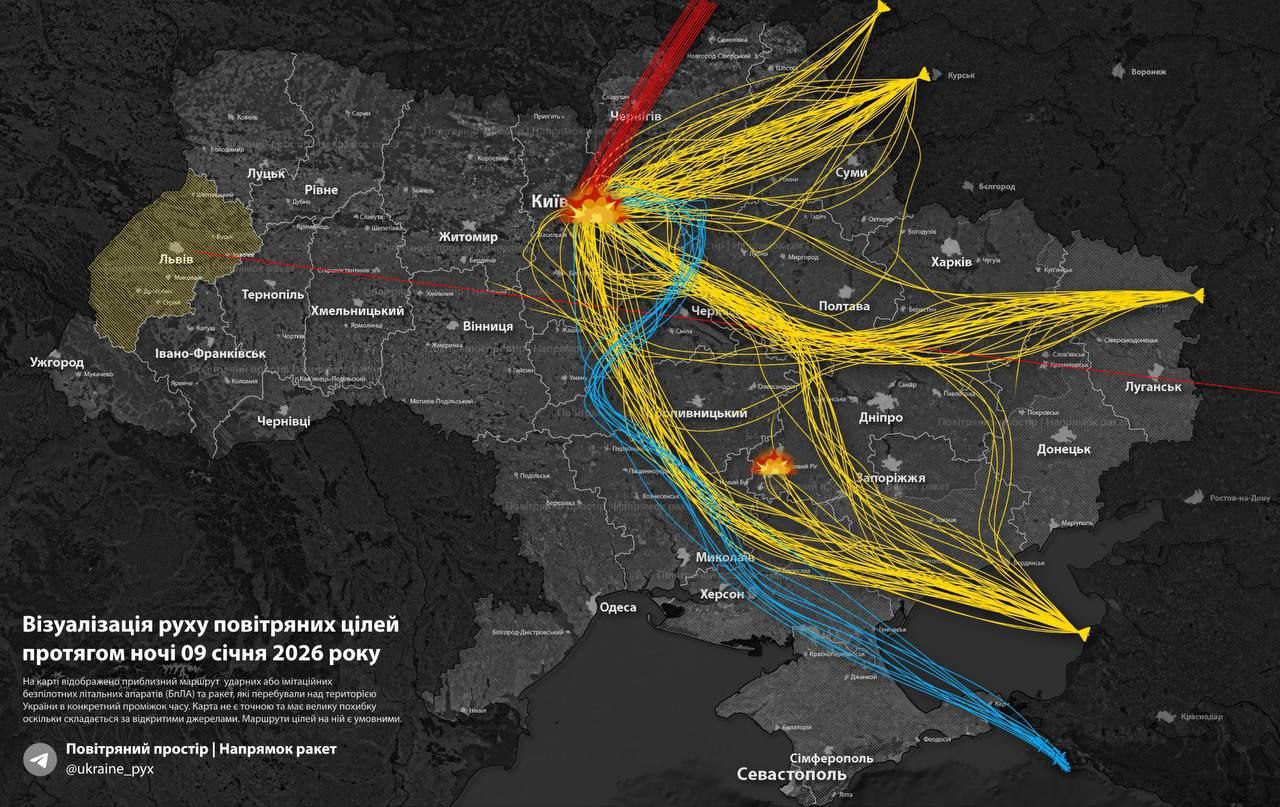
But the real hurt came with a medium-sized drone and missile strike on Kiev. At least three combined-thermal-electric facilities were taken out. These used to provide water, heating and electricity to the blocks of Soviet era high rises that cover much of Kiev. These strikes, as the Russian Ministry of Defense empathizes in its reports, are in retaliation for strikes on Russian infrastructure facilities. Russia at a time, offered a ceasefire on infrastructure strikes. Ukraine did not keep to it.
Now nearly half of Kiev’s high-rise apartments have lost water, heating and electricity supplies. This while the temperature has gone down to minus 20° Celsius at night. Municipal workers have started to drain (in Russian) all water from intra-house systems. Otherwise the risers and pipes would freeze and break open. But it also means that water and heat supplies will not come back to those high-rises until the temperatures are back in a positive Celsius range.
The buildings have thus become unlivable. Hundreds of thousands if not millions will have to live elsewhere.
The mayor of Kiev Vladimir Klitschko has called on residents to leave the capital:
Half of Kyiv’s apartment buildings, almost 6,000, are currently without heat supply after critical infrastructure in the capital was damaged in a large-scale Russian attack.
“Municipal workers have connected social facilities – in particular hospitals and maternity hospitals – to mobile boiler houses. And together with energy workers they are working to bring electricity and heat supply back to Kyiv residents’ homes,” Klitschko said.
He added that the combined attack on Kyiv on the night of 8-9 January was the most painful for the capital’s critical infrastructure facilities.
“City services are operating under emergency conditions. And unfortunately weather conditions are forecast to be difficult in the coming days.
I also appeal to residents of the capital who have the opportunity to temporarily leave the city and go where there are alternative sources of power and heat, to do so,” Klitschko concluded.
A similar situation exist in Dnipro, one of Ukraine’s most industrial cities, since yesterday.
During the war the parts of the Ukrainian population that were not directly involved in fighting seemed to have little interest in what was happening. There was still a lot of nightlife in Kiev, all goods were available and even the few short interruptions of electricity were not much to bother with.
This will now change. Electricity is off for most of the time. Shops are closing because running business on generators is unprofitable. Local public transport is mostly down. Longer range tail transport is interrupted. Apartments are unlivable. The consequences of the war have become personal.
This will change the mood even of those who want to prolong the war. The numbers of those willing to accept the loss of territory in exchange for peace will rise.
After a while a change of policies will follow for this.
Reprinted with permission from Moon of Alabama.
